


SPECIFIC GROUPS


1 - 4
<
>
CONDITIONS
SYMPTOM CHECKER
Male
Female
Arm, Hand & Shoulder Concerns
Broken Bones
Legs & Feet Concerns
Dental & Mouth Concerns
Ear & Nose
Eye Conditions
Head Conditions
Arm, Hand & Shoulder Concerns
Broken Bones
Legs & Feet Concerns
Front
Back
Arm, Hand & Shoulder Concerns
Broken Bones
Dental & Mouth Concerns
Ear & Nose
Eye Conditions
Head Conditions
Arm, Hand & Shoulder Concerns
Broken Bones
Dental & Mouth Concerns
Ear & Nose
Eye Conditions
Head Conditions
Front
Back
Living
Healthy
Online Clinic
Wise Healthcare
Mental & Social Health
Family Life
Financial Wellness
Violence & Abuse
Print on Demand
RELATED ARTICLES
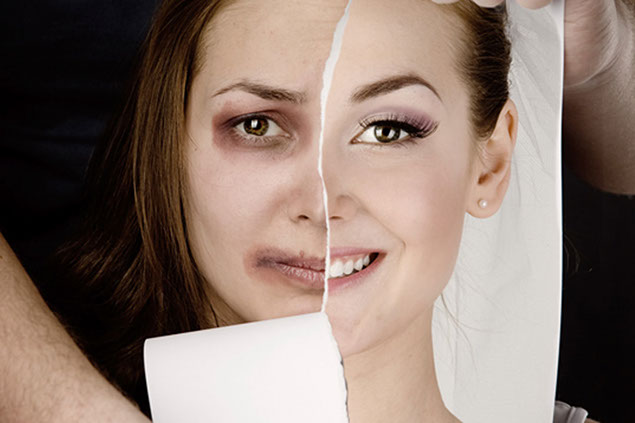
Violence is the intended use or threat of force or power against one or more persons or even oneself. It results in physical or emotional harm, deprivation, or, too often, death. Worldwide, violence causes 44% of deaths among males; 7% among females.
Abuse is one form of violence. It can be emotional, physical, economic, and/or sexual.
Violence and abuse are law and order issues, as well as, personal and public health issues.
Signs & Symptoms
A person who commits violence and abuse does the things listed below. The signs often progress from ones that cause less harm to ones that can threaten life.
• Uses verbal abuse, such as name calling.
• Acts possessive and extremely jealous.
• Has a bad temper. Does violent acts in front of others, but doesn’t harm them. An example is putting a fist through a wall.
• Gives threats.
• Acts cruel to animals.
• Pushes, slaps, and/or restrains others.
• Punches. Kicks. Bites. Sexually assaults.
• Chokes others. Breaks bones. Uses weapons.
Causes
Violence and abuse are ways to gain and keep control over others. Persons who commit violence or abuse come from all groups and backgrounds. Often, they have these problems:
• Poor skills to communicate.
• A family history of violence. They may have been abused in the past. They may have seen one parent beat the other.
• Alcohol or drug abuse.
National Center for Victims of Crime
202.467.8700
National Domestic Violence Hotline
800.799.7233
Treatment
Treatment for the victim of abuse or violence depends on the situation and includes:
• Emergency medical care. Calling the police.
• Going to a safe place, such as a shelter for victims of abuse.
• Counseling.
• Training to be assertive.
In general, persons who abuse others or commit violence find it hard to change their behavior without professional help.
Questions to Ask
Question 1
Does violence cause any of these problems?
• The person is not responsive. The person has a serious injury or bleeds a lot.
• The person has severe problems breathing or has chest pain due to the abuse.
Get medical care without delay. If symptoms are life threatening go to the ER or call 9-1-1. Don’t call 9-1-1 or use the ER if symptoms do not threaten life. Ask your doctor ahead of time where you should go for a problem that needs prompt care, but not emergency care.
Question 2
Do any of these problems occur?
• The person is being abused right now.
• A weapon is used during an assault.
• A child is threatened or neglected. A child is left alone in a car.
• The person has been raped.
• The person does not feel safe.
• The abused person is pregnant.
Get medical care without delay. If symptoms are life threatening go to the ER or call 9-1-1. Don’t call 9-1-1 or use the ER if symptoms do not threaten life. Ask your doctor ahead of time where you should go for a problem that needs prompt care, but not emergency care.
Question 3
Is the person in an abusive relationship? Is a child suspected of being abused, mistreated, and/or neglected?
Call your doctor or counselor and state the problem. He or she can decide what you should do.
Use Self-Care / Prevention:
You can probably take care of the problem yourself if you answered NO to all the questions. Use the “Self-Care” measures that are listed. Call your doctor if you don’t feel better soon, though. You may have some other problem.
Self-Care / Prevention
To Handle Being in an Abusive Relationship
• Get help!
• Have a safety plan for times you feel unsafe or in danger.
– Decide who you will call (e.g., police, neighbors, relatives, a shelter). Make a list of these telephone numbers. Memorize them, too.
– Decide where you will go. If you have children and pets, develop safety plans. Practice the safety plans with your children. Have a plan for taking them with you. Have plans for where they should go if you can’t get away.
– Keep extra keys to your car and house in a safe place unknown to the person abusing you.
– Put some cash in a safe place that you can get quickly in case you need money for transportation to a safe place.
To Manage Conflict Without Violence
• When you communicate, state your needs without putting others down.
• Learn to deal with frustration, rejection, ridicule, jealousy, and anger.
• Accept differences in others. This includes sexual preferences, ethnic and religious backgrounds, etc. You do not need to change your beliefs, but don’t expect other persons to change theirs, either.
• Be an active listener. Focus on what the other person is saying. Try to understand his or her point of view. Or, simply accept it as an opinion.
• Take a course that teaches skills to manage conflict.
• When you can’t resolve a conflict on your own, get help.
This website is not meant to substitute for expert medical advice or treatment. Follow your doctor’s or health care provider’s advice if it differs from what is given in this guide.
The American Institute for Preventive Medicine (AIPM) is not responsible for the availability or content of external sites, nor does AIPM endorse them. Also, it is the responsibility of the user to examine the copyright and licensing restrictions of external pages and to secure all necessary permission.
The content on this website is proprietary. You may not modify, copy, reproduce, republish, upload, post, transmit, or distribute, in any manner, the material on the website without the written permission of AIPM.
Pediatric Care
2022 © American Institute for Preventive Medicine - All Rights Reserved. Disclaimer | www.HealthyLife.com


