


SPECIFIC GROUPS


1 - 4
<
>
CONDITIONS
SYMPTOM CHECKER
Male
Female
Arm, Hand & Shoulder Concerns
Broken Bones
Legs & Feet Concerns
Dental & Mouth Concerns
Ear & Nose
Eye Conditions
Head Conditions
Arm, Hand & Shoulder Concerns
Broken Bones
Legs & Feet Concerns
Front
Back
Arm, Hand & Shoulder Concerns
Broken Bones
Dental & Mouth Concerns
Ear & Nose
Eye Conditions
Head Conditions
Arm, Hand & Shoulder Concerns
Broken Bones
Dental & Mouth Concerns
Ear & Nose
Eye Conditions
Head Conditions
Front
Back
Living
Healthy
Online Clinic
Wise Healthcare
Mental & Social Health
Family Life
Financial Wellness
Prevent Injuries
Print on Demand
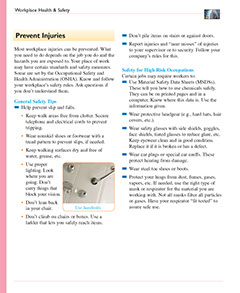
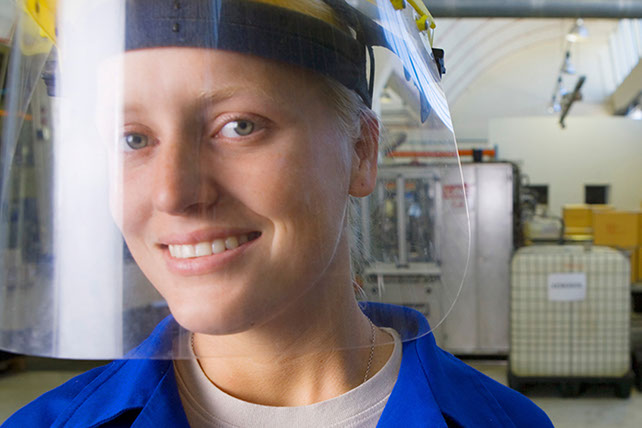
Most workplace injuries can be prevented. What you need to do depends on the job you do and the hazards you are exposed to. Your place of work may have certain standards and safety measures. Some are set by the Occupational Safety and Health Administration (OSHA). Know and follow your workplace’s safety rules. Ask questions if you don’t understand them.
General Safety Tips
RELATED ARTICLES
• Help prevent slip and falls.
– Keep walk areas free from clutter. Secure telephone and electrical cords to prevent tripping.
– Wear nonskid shoes or footwear with a tread pattern to prevent slips, if needed.
– Keep walking surfaces dry and free of water, grease, etc.
– Use proper lighting. Look where you are going. Don’t carry things that block your vision.
– Don’t lean back in your chair.
– Don’t climb on chairs or boxes. Use a ladder that lets you safely reach items.
• Don’t pile items on stairs or against doors.
• Report injuries and “near misses” of injuries to your supervisor or to security. Follow your company’s rules for this.
Safety for High Risk Occupations
Certain jobs may require workers to:
• Use Material Safety Data Sheets (MSDSs). These tell you how to use chemicals safely. They can be on printed pages and in a computer. Know where this data is. Use the information given.
• Wear protective headgear (e.g., hard hats, hair covers, etc.).
• Wear safety glasses with side shields, goggles, face shields, tinted glasses to reduce glare, etc. Keep eyewear clean and in good condition. Replace it if it is broken or has a defect.
• Wear ear plugs or special ear muffs. These protect hearing from damage.
• Wear steel-toe shoes or boots.
• Protect your lungs from dust, fumes, gases, vapors, etc. If needed, use the right type of mask or respirator for the material you are working with. Not all masks filter all particles or gases. Have your respirator “fit tested” to assure safe use.
This website is not meant to substitute for expert medical advice or treatment. Follow your doctor’s or health care provider’s advice if it differs from what is given in this guide.
The American Institute for Preventive Medicine (AIPM) is not responsible for the availability or content of external sites, nor does AIPM endorse them. Also, it is the responsibility of the user to examine the copyright and licensing restrictions of external pages and to secure all necessary permission.
The content on this website is proprietary. You may not modify, copy, reproduce, republish, upload, post, transmit, or distribute, in any manner, the material on the website without the written permission of AIPM.
Pediatric Care
2022 © American Institute for Preventive Medicine - All Rights Reserved. Disclaimer | www.HealthyLife.com


