


SPECIFIC GROUPS


1 - 4
<
>
SYMPTOM CHECKER
CONDITIONS
Male
Female
Arm, Hand & Shoulder Concerns
Legs & Feet Concerns
Dental & Mouth Concerns
Ear & Nose
Eye Conditions
Head Conditions
Arm, Hand & Shoulder Concerns
Legs & Feet Concerns
Front
Back
Arm, Hand & Shoulder Concerns
Dental & Mouth Concerns
Ear & Nose
Eye Conditions
Head Conditions
Arm, Hand & Shoulder Concerns
Dental & Mouth Concerns
Ear & Nose
Eye Conditions
Head Conditions
Front
Back
Living
Healthy
Online Clinic
Wise Healthcare
Online Counseling Center
Family Life
Financial Wellness
Strategies for Reducing Fats and Cholesterol
Print on Demand

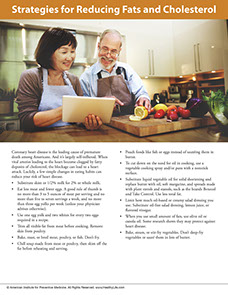
Coronary heart disease is the leading cause of premature death among Americans. And it’s largely self-inflicted. When vital arteries leading to the heart become clogged by fatty deposits of cholesterol, the blockage can lead to a heart attack. Luckily, a few simple changes in eating habits can reduce your risk of heart disease.
• Substitute skim or 1/2% milk for 2% or whole milk.
• Eat less meat and fewer eggs. A good rule of thumb is no more than 3 to 5 ounces of meat per serving and no more than five to seven servings a week, and no more than three egg yolks per week (unless your physician advises otherwise).
• Use one egg yolk and two whites for every two eggs required in a recipe.
• Trim all visible fat from meat before cooking. Remove skin from poultry.
• Bake, roast, or broil meat, poultry, or fish. Don’t fry.
• Chill soup made from meat or poultry, then skim off the fat before reheating and serving.
• Poach foods like fish or eggs instead of sautéing them in butter.
• To cut down on the need for oil in cooking, use a vegetable cooking spray and/or pans with a nonstick surface.
• Substitute liquid vegetable oil for solid shortening and replace butter with oil, soft margarine, and spreads made with plant sterols and stanols, such as the brands Benecol and Take Control. Use less total fat.
• Limit how much oil-based or creamy salad dressing you use. Substitute oil-free salad dressing, lemon juice, or flavored vinegar.
• When you use small amount of fats, use olive oil or canola oil. Some research shows they may protect against heart disease.
• Bake, steam, or stir-fry vegetables. Don’t deep-fry vegetables or sauté them in lots of butter.
This website is not meant to substitute for expert medical advice or treatment. Follow your doctor’s or health care provider’s advice if it differs from what is given in this guide.
The American Institute for Preventive Medicine (AIPM) is not responsible for the availability or content of external sites, nor does AIPM endorse them. Also, it is the responsibility of the user to examine the copyright and licensing restrictions of external pages and to secure all necessary permission.
The content on this website is proprietary. You may not modify, copy, reproduce, republish, upload, post, transmit, or distribute, in any manner, the material on the website without the written permission of AIPM.
2022 © American Institute for Preventive Medicine - All Rights Reserved. Disclaimer | www.HealthyLife.com


