SPECIFIC GROUPS


1 - 4
<
>
CONDITIONS
SYMPTOM CHECKER
Male
Female
Arm, Hand & Shoulder Concerns
Broken Bones
Legs & Feet Concerns
Dental & Mouth Concerns
Ear & Nose
Eye Conditions
Head Conditions
Arm, Hand & Shoulder Concerns
Broken Bones
Legs & Feet Concerns
Front
Back
Arm, Hand & Shoulder Concerns
Broken Bones
Dental & Mouth Concerns
Ear & Nose
Eye Conditions
Head Conditions
Arm, Hand & Shoulder Concerns
Broken Bones
Dental & Mouth Concerns
Ear & Nose
Eye Conditions
Head Conditions
Front
Back
Living
Healthy
Online Clinic
Wise Healthcare
Mental & Social Health
Family Life
Financial Wellness
Home Safe Home

Print on Demand
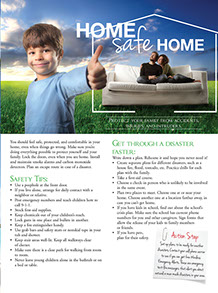
Protect your family from accidents, injuries, and intruders.
You should feel safe, protected, and comfortable in your home, even when things go wrong. Make sure you’re doing everything possible to protect yourself and your family. Lock the doors, even when you are home. Install and maintain smoke alarms and carbon monoxide detectors. Plan an escape route in case of a disaster.
RELATED ARTICLES
Safety Tips:
• Use a peephole at the front door.
• If you live alone, arrange for daily contact with a neighbor or relative.
• Post emergency numbers and teach children how to call 9-1-1.
• Stock first-aid supplies.
• Keep chemicals out of your children’s reach.
• Lock guns in one place and bullets in another.
• Keep a fire extinguisher handy.
• Use grab bars and safety mats or nonskid tape in your tub and shower.
• Keep stair areas well-lit. Keep all walkways clear of clutter.
• Make sure there is a clear path for walking from room to room.
• Never leave young children alone in the bathtub or on a bed or table.
Easy Ways to Childproof Your Home
Ways to get through a disaster faster:
Write down a plan. Rehearse it and hope you never need it!
• Create separate plans for different disasters, such as a house fire, flood, tornado, etc. Practice drills for each plan with the family.
• Take a first-aid course.
• Choose a check-in person who is unlikely to be involved in the same event.
• Plan two places to meet. Choose one at or near your home. Choose another one at a location farther away, in case you can’t get home.
• If you have kids in school, find out about the school’s crisis plan. Make sure the school has current phone numbers for you and other caregivers. Sign forms that allow the release of your kids to family members or friends.
• If you have pets, plan for their safety.
Action Step
Set up plans to be ready for weather disasters. Contact your cell phone carrier to see if you can get free Wireless Emergency Alerts.
This website is not meant to substitute for expert medical advice or treatment. Follow your doctor’s or health care provider’s advice if it differs from what is given in this guide.
The American Institute for Preventive Medicine (AIPM) is not responsible for the availability or content of external sites, nor does AIPM endorse them. Also, it is the responsibility of the user to examine the copyright and licensing restrictions of external pages and to secure all necessary permission.
The content on this website is proprietary. You may not modify, copy, reproduce, republish, upload, post, transmit, or distribute, in any manner, the material on the website without the written permission of AIPM.
Pediatric Care
2022 © American Institute for Preventive Medicine - All Rights Reserved. Disclaimer | www.HealthyLife.com