

SPECIFIC GROUPS




1 - 4
<
>
SYMPTOM CHECKER
CONDITIONS
Male
Female
Arm, Hand & Shoulder Concerns
Legs & Feet Concerns
Dental & Mouth Concerns
Ear & Nose
Eye Conditions
Head Conditions
Arm, Hand & Shoulder Concerns
Legs & Feet Concerns
Front
Back
Arm, Hand & Shoulder Concerns
Dental & Mouth Concerns
Ear & Nose
Eye Conditions
Head Conditions
Arm, Hand & Shoulder Concerns
Dental & Mouth Concerns
Ear & Nose
Eye Conditions
Head Conditions
Front
Back
Living
Healthy
Online Clinic
Wise Healthcare
Online Counseling Center
Family Life
Financial Wellness
What is the intermittent fasting diet?
Print on Demand
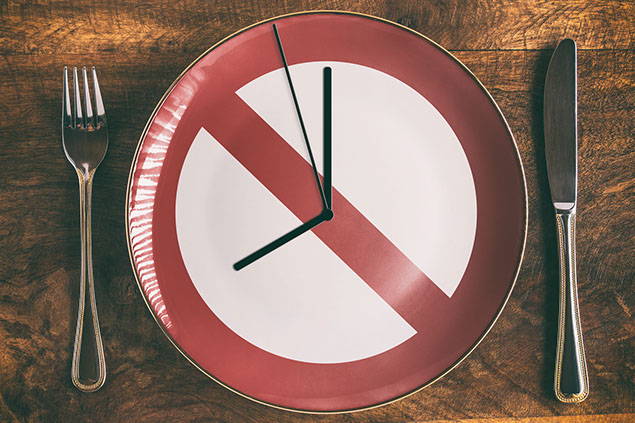
The intermittent fasting (IF) diet is one of the latest diet trends. The idea behind the IF diet is to use fasting, or periods of not eating, to lose weight.
The IF diet does not focus on the types of foods you eat. Instead, it tells you to eat within certain time frames. Some IF plans say you should eat within a few hours of each day. For instance, you can eat within an 8-hour window, from noon to 8 p.m. Then, during the other 16 hours, you do not eat.
Other IF plans tell you to eat normally for a few days a week and do a “fast” on other days. This fast may mean not eating at all or eating only small amounts. Some plans tell you to eat normally five days a week, followed by a 24-hour fast for two days.
The history of fasting
People who support IF diet plans say that humans are built for fasting. Our ancient ancestors didn’t have food available all the time as we do today. They didn’t have refrigerators or ways to keep food fresh and on hand. They didn’t have grocery stores and restaurants open all night.
Before modern times, humans hunted or gathered plants for food during the day. Then, there would be no food for several hours. Sometimes, they would go for a day or more without eating because they couldn’t get food at all. For these reasons, some people believe that fasting is a way to use a similar approach today.
More studies
Many of the IF diet studies have been done using rats. But some small human studies show that IF can help some people lose weight.
Research shows that IF doesn’t seem to work better than other healthy diets. And, fasting can be hard to do.
The intermittent fasting diet is not a magical weight loss solution for everyone. But, if you are in good health and your doctor says it’s OK, it may be worth a try.
This website is not meant to substitute for expert medical advice or treatment. Follow your doctor’s or health care provider’s advice if it differs from what is given in this guide.
The American Institute for Preventive Medicine (AIPM) is not responsible for the availability or content of external sites, nor does AIPM endorse them. Also, it is the responsibility of the user to examine the copyright and licensing restrictions of external pages and to secure all necessary permission.
The content on this website is proprietary. You may not modify, copy, reproduce, republish, upload, post, transmit, or distribute, in any manner, the material on the website without the written permission of AIPM.
2022 © American Institute for Preventive Medicine - All Rights Reserved. Disclaimer | www.HealthyLife.com