

SPECIFIC GROUPS




1 - 4
<
>
SYMPTOM CHECKER
CONDITIONS
Male
Female
Arm, Hand & Shoulder Concerns
Legs & Feet Concerns
Dental & Mouth Concerns
Ear & Nose
Eye Conditions
Head Conditions
Arm, Hand & Shoulder Concerns
Legs & Feet Concerns
Front
Back
Arm, Hand & Shoulder Concerns
Dental & Mouth Concerns
Ear & Nose
Eye Conditions
Head Conditions
Arm, Hand & Shoulder Concerns
Dental & Mouth Concerns
Ear & Nose
Eye Conditions
Head Conditions
Front
Back
Living
Healthy
Online Clinic
Wise Healthcare
Online Counseling Center
Family Life
Financial Wellness
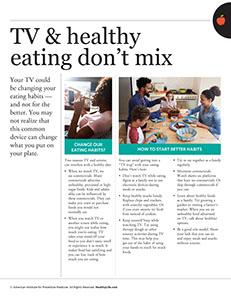
TV & healthy eating don’t mix
Print on Demand
Your TV could be changing your eating habits — and not for the better. You may not realize that this common device can change what you put on your plate.
How does TV change our eating habits?
Two reasons TV and screens can interfere with a healthy diet:
• When we watch TV, we see commercials. Many commercials advertise unhealthy, processed or high-sugar foods. Kids and adults alike can be influenced by these commercials. They can make you crave or purchase foods you would not normally eat.
• When you watch TV or another screen while eating, you might not realize how much you’re eating. TV takes your mind off your food so you don’t taste, smell or experience it as much. It makes food less satisfying and you can lose track of how much you are eating.
How to start better habits
You can avoid getting into a “TV trap” with your eating habits. Here’s how:
• Don’t watch TV while eating. Agree as a family not to use electronic devices during meals or snacks.
• Keep healthy snacks handy. Replace chips and crackers with crunchy vegetables. Or if you crave sweets, try fresh fruit instead of cookies.
• Keep yourself busy while watching TV. Try using therapy dough or other sensory activities during TV time. This may help you get out of the habit of using your hands to reach for snack foods.
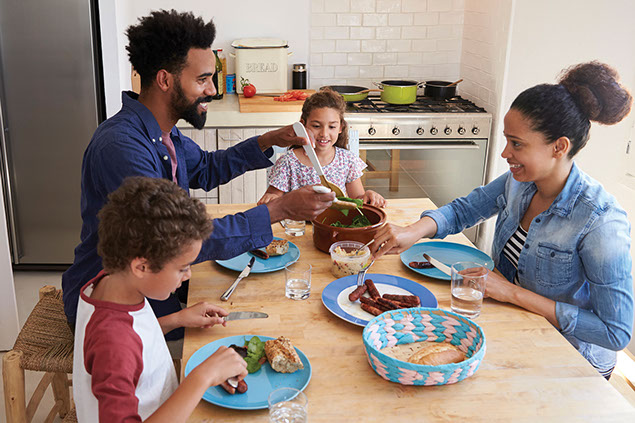
• Try to eat together as a family regularly.
• Minimize commercials. Watch shows on platforms that have no commercials. Or skip through commercials if you can.
• Learn about healthy foods as a family. Try growing a garden or visiting a farmer’s market. When you see an unhealthy food advertised on TV, talk about healthier options.
• Be a good role model. Show your kids that you can sit and enjoy meals and snacks without screens.
This website is not meant to substitute for expert medical advice or treatment. Follow your doctor’s or health care provider’s advice if it differs from what is given in this guide.
The American Institute for Preventive Medicine (AIPM) is not responsible for the availability or content of external sites, nor does AIPM endorse them. Also, it is the responsibility of the user to examine the copyright and licensing restrictions of external pages and to secure all necessary permission.
The content on this website is proprietary. You may not modify, copy, reproduce, republish, upload, post, transmit, or distribute, in any manner, the material on the website without the written permission of AIPM.
2022 © American Institute for Preventive Medicine - All Rights Reserved. Disclaimer | www.HealthyLife.com