

SPECIFIC GROUPS




1 - 4
<
>
SYMPTOM CHECKER
CONDITIONS
Male
Female
Arm, Hand & Shoulder Concerns
Legs & Feet Concerns
Dental & Mouth Concerns
Ear & Nose
Eye Conditions
Head Conditions
Arm, Hand & Shoulder Concerns
Legs & Feet Concerns
Front
Back
Arm, Hand & Shoulder Concerns
Dental & Mouth Concerns
Ear & Nose
Eye Conditions
Head Conditions
Arm, Hand & Shoulder Concerns
Dental & Mouth Concerns
Ear & Nose
Eye Conditions
Head Conditions
Front
Back
Living
Healthy
Online Clinic
Wise Healthcare
Online Counseling Center
Family Life
Financial Wellness
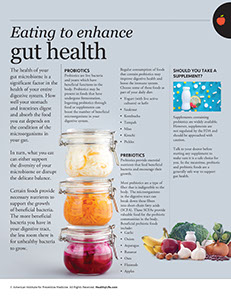
Eating to enhance gut health
Print on Demand
The health of your gut microbiome is a significant factor in the health of your entire digestive system. How well your stomach and intestines digest and absorb the food you eat depends on the condition of the microorganisms in your gut.
In turn, what you eat can either support the diversity of your microbiome or disrupt the delicate balance.
Certain foods provide necessary nutrients to support the growth of beneficial bacteria. The more beneficial bacteria you have in your digestive tract, the less room there is for unhealthy bacteria to grow.
Probiotics
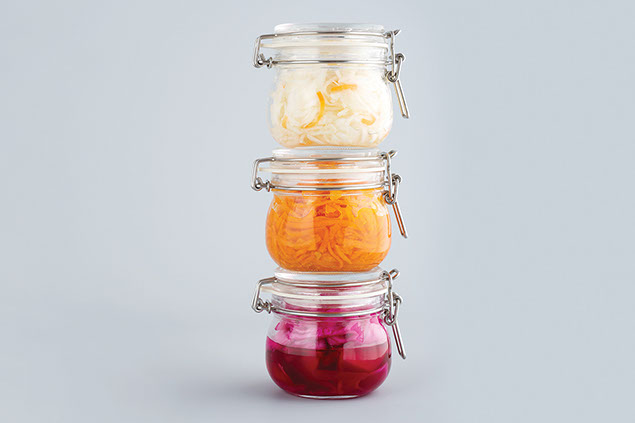
Probiotics are live bacteria and yeasts which have beneficial functions in the body. Probiotics may be present in foods that have undergone fermentation. Ingesting probiotics through food or supplements can boost the number of beneficial microorganisms in your digestive system.
Regular consumption of foods that contain probiotics may improve digestive health and boost the immune system. Choose some of these foods as part of your daily diet:
• Yogurt (with live active cultures) or kefir
• Saukraut
• Kombucha
• Tempah
• Miso
• Kimchi
• Pickles
Prebiotics
Prebiotics provide essential nutrients that feed beneficial bacteria and encourage their growth.
Most prebiotics are a type of fiber that is indigestible to the body. The microorganisms in the digestive tract can break down these fibers into short-chain fatty acids (SCFA). These SCFAs provide valuable food for the probiotic communities in the body. Beneficial prebiotic foods include:
• Garlic
• Onion
• Asparagus
• Bananas
• Oats
• Flaxseeds
• Apples
Should you take a supplement?
Supplements containing probiotics are widely available. However, supplements are not regulated by the FDA and should be approached with caution.
Talk to your doctor before starting any supplement to make sure it is a safe choice for you. In the meantime, probiotic and prebiotic foods are a generally safe way to support gut health.
This website is not meant to substitute for expert medical advice or treatment. Follow your doctor’s or health care provider’s advice if it differs from what is given in this guide.
The American Institute for Preventive Medicine (AIPM) is not responsible for the availability or content of external sites, nor does AIPM endorse them. Also, it is the responsibility of the user to examine the copyright and licensing restrictions of external pages and to secure all necessary permission.
The content on this website is proprietary. You may not modify, copy, reproduce, republish, upload, post, transmit, or distribute, in any manner, the material on the website without the written permission of AIPM.
2022 © American Institute for Preventive Medicine - All Rights Reserved. Disclaimer | www.HealthyLife.com