

SPECIFIC GROUPS



1 - 4
<
>
SYMPTOM CHECKER
CONDITIONS
Male
Female
Arm, Hand & Shoulder Concerns
Legs & Feet Concerns
Dental & Mouth Concerns
Ear & Nose
Eye Conditions
Head Conditions
Arm, Hand & Shoulder Concerns
Legs & Feet Concerns
Front
Back
Arm, Hand & Shoulder Concerns
Dental & Mouth Concerns
Ear & Nose
Eye Conditions
Head Conditions
Arm, Hand & Shoulder Concerns
Dental & Mouth Concerns
Ear & Nose
Eye Conditions
Head Conditions
Front
Back
Living
Healthy
Online Clinic
Wise Healthcare
Online Counseling Center
Family Life
Financial Wellness
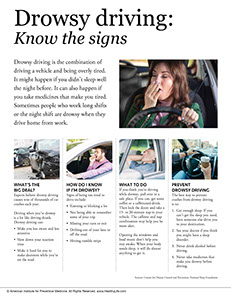
Drowsy driving: Know the signs
Print on Demand
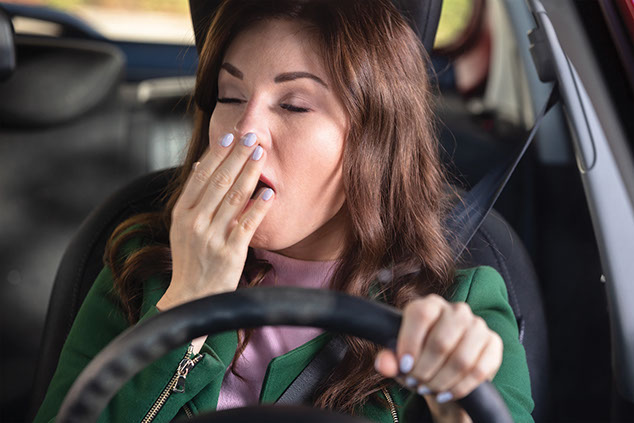
Drowsy driving is the combination of driving a vehicle and being overly tired. It might happen if you didn’t sleep well the night before. It can also happen if you take medicines that make you tired. Sometimes people who work long shifts or the night shift are drowsy when they drive home from work.
What’s the big deal?
Experts believe drowsy driving causes tens of thousands of car crashes each year.
Driving when you’re drowsy is a lot like driving drunk. Drowsy driving can:
• Make you less aware and less attentive
• Slow down your reaction time
• Make it hard for you to make decisions while you’re on the road
How do I know if I’m drowsy?
Signs of being too tired to drive include:
• Yawning or blinking a lot
• Not being able to remember some of your trip
• Missing your turn or exit
• Drifting out of your lane or off the road
• Hitting rumble strips
What to do
If you think you’re driving while drowsy, pull over in a safe place. If you can, get some coffee or a caffeinated drink. Then lock the doors and take a 15- to 20-minute nap in your vehicle. The caffeine and nap combination may help you be more alert.
Opening the windows and loud music don’t help you stay awake. When your body needs sleep, it will do almost anything to get it.
Prevent drowsy driving
The best way to prevent crashes from drowsy driving is to:
1. Get enough sleep. If you can’t get the sleep you need, have someone else drive you to your destination.
2. See your doctor if you think you might have a sleep disorder.
3. Never drink alcohol before driving.
4. Never take medicines that make you drowsy before driving.
Sources: Centers for Disease Control and Prevention, National Sleep Foundation
This website is not meant to substitute for expert medical advice or treatment. Follow your doctor’s or health care provider’s advice if it differs from what is given in this guide.
The American Institute for Preventive Medicine (AIPM) is not responsible for the availability or content of external sites, nor does AIPM endorse them. Also, it is the responsibility of the user to examine the copyright and licensing restrictions of external pages and to secure all necessary permission.
The content on this website is proprietary. You may not modify, copy, reproduce, republish, upload, post, transmit, or distribute, in any manner, the material on the website without the written permission of AIPM.
2022 © American Institute for Preventive Medicine - All Rights Reserved. Disclaimer | www.HealthyLife.com