

SPECIFIC GROUPS




1 - 4
<
>
SYMPTOM CHECKER
CONDITIONS
Male
Female
Arm, Hand & Shoulder Concerns
Legs & Feet Concerns
Dental & Mouth Concerns
Ear & Nose
Eye Conditions
Head Conditions
Arm, Hand & Shoulder Concerns
Legs & Feet Concerns
Front
Back
Arm, Hand & Shoulder Concerns
Dental & Mouth Concerns
Ear & Nose
Eye Conditions
Head Conditions
Arm, Hand & Shoulder Concerns
Dental & Mouth Concerns
Ear & Nose
Eye Conditions
Head Conditions
Front
Back
Living
Healthy
Online Clinic
Wise Healthcare
Online Counseling Center
Family Life
Financial Wellness
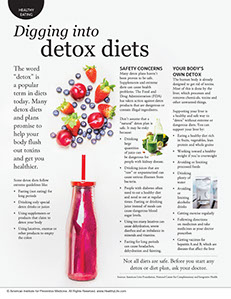
Digging into detox diets

Print on Demand
The word “detox” is a popular term in diets today. Many detox diets and plans promise to help your body flush out toxins and get you healthier.
Some detox diets follow extreme guidelines like:
• Fasting (not eating) for long periods
• Drinking only special detox drinks or juices
• Using supplements or products that claim to detox your body
• Using laxatives, enemas or other products to empty the colon
Safety concerns
Many detox plans haven’t been proven to be safe. Supplements and extreme diets can cause health problems. The Food and Drug Administration (FDA) has taken action against detox products that are dangerous or contain illegal ingredients.
Don’t assume that a “natural” detox plan is safe. It may be risky because:
• Drinking large quantities of juice can be dangerous for people with kidney disease.
• Drinking juices that are “raw” or unpasteurized can cause serious illnesses from bacteria.
• People with diabetes often need to eat a healthy diet and need to eat at regular times. Fasting or drinking juice instead of meals can cause dangerous blood sugar levels.
• Using too many laxatives can cause dehydration, severe diarrhea and an imbalance in minerals and vitamins.
• Fasting for long periods can cause headaches, dehydration and fainting.
Your body’s own detox
The human body is already designed to get rid of toxins. Most of this is done by the liver, which processes and removes chemicals, toxins and other unwanted things.
Supporting your liver is a healthy and safe way to “detox” without extreme or dangerous diets. You can support your liver by:
• Eating a healthy diet rich in fruits, vegetables, lean protein and whole grains
• Working toward a healthy weight if you’re overweight
• Avoiding or limiting processed foods
• Drinking plenty of water
• Avoiding or limiting alcoholic drinks
• Getting exercise regularly
• Following directions on medicines and take medicines as your doctor prescribes
• Getting vaccines for hepatitis A and B, which are diseases that affect the liver
Not all diets are safe. Before you start any detox or diet plan, ask your doctor.
Sources: American Liver Foundation, National Center for Complementary and Integrative Health
This website is not meant to substitute for expert medical advice or treatment. Follow your doctor’s or health care provider’s advice if it differs from what is given in this guide.
The American Institute for Preventive Medicine (AIPM) is not responsible for the availability or content of external sites, nor does AIPM endorse them. Also, it is the responsibility of the user to examine the copyright and licensing restrictions of external pages and to secure all necessary permission.
The content on this website is proprietary. You may not modify, copy, reproduce, republish, upload, post, transmit, or distribute, in any manner, the material on the website without the written permission of AIPM.
2022 © American Institute for Preventive Medicine - All Rights Reserved. Disclaimer | www.HealthyLife.com