
SPECIFIC GROUPS




1 - 4
<
>
SYMPTOM CHECKER
CONDITIONS
Male
Female
Arm, Hand & Shoulder Concerns
Legs & Feet Concerns
Dental & Mouth Concerns
Ear & Nose
Eye Conditions
Head Conditions
Arm, Hand & Shoulder Concerns
Legs & Feet Concerns
Front
Back
Arm, Hand & Shoulder Concerns
Dental & Mouth Concerns
Ear & Nose
Eye Conditions
Head Conditions
Arm, Hand & Shoulder Concerns
Dental & Mouth Concerns
Ear & Nose
Eye Conditions
Head Conditions
Front
Back
Living
Healthy
Online Clinic
Wise Healthcare
Online Counseling Center
Family Life
Financial Wellness
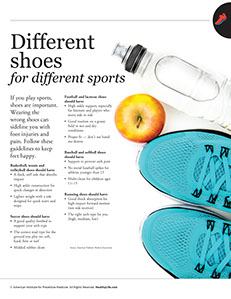
Different shoes for different sports
Print on Demand
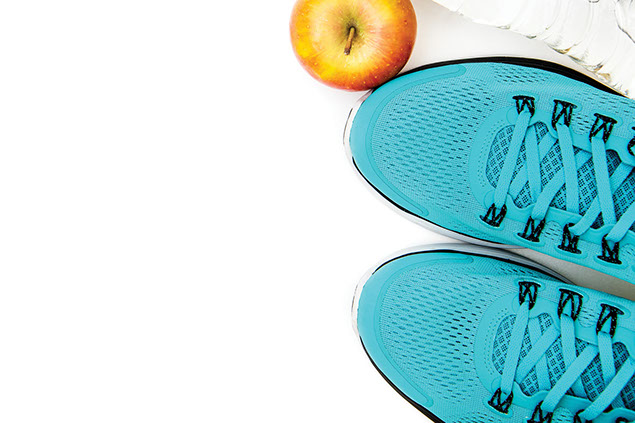
If you play sports, shoes are important. Wearing the wrong shoes can sideline you with foot injuries and pain. Follow these guidelines to keep feet happy.
Basketball, tennis and volleyball shoes should have:
• A thick, stiff sole that absorbs impact
• High ankle construction for quick changes in direction
• Lighter weight with a sole designed for quick starts and stops
Soccer shoes should have:
• A good quality footbed to support your arch type
• The correct stud type for the ground you play on: soft, hard, firm or turf
• Molded rubber cleats
Football and lacrosse shoes should have:
• High ankle support, especially for linemen and players who move side to side
• Good traction on a grassy field in wet and dry conditions
• Proper fit — don’t use hand-me-downs
Baseball and softball shoes should have:
• Support to prevent arch pain
• No metal baseball spikes for athletes younger than 13
• Multi-cleats for children ages 11–15
Running shoes should have:
• Good shock absorption for high-impact forward motion (not side motion)
• The right arch type for you (high, medium, low)
Source: American Podiatric Medical Association
This website is not meant to substitute for expert medical advice or treatment. Follow your doctor’s or health care provider’s advice if it differs from what is given in this guide.
The American Institute for Preventive Medicine (AIPM) is not responsible for the availability or content of external sites, nor does AIPM endorse them. Also, it is the responsibility of the user to examine the copyright and licensing restrictions of external pages and to secure all necessary permission.
The content on this website is proprietary. You may not modify, copy, reproduce, republish, upload, post, transmit, or distribute, in any manner, the material on the website without the written permission of AIPM.
2022 © American Institute for Preventive Medicine - All Rights Reserved. Disclaimer | www.HealthyLife.com