

SPECIFIC GROUPS



1 - 4
<
>
SYMPTOM CHECKER
CONDITIONS
Male
Female
Arm, Hand & Shoulder Concerns
Legs & Feet Concerns
Dental & Mouth Concerns
Ear & Nose
Eye Conditions
Head Conditions
Arm, Hand & Shoulder Concerns
Legs & Feet Concerns
Front
Back
Arm, Hand & Shoulder Concerns
Dental & Mouth Concerns
Ear & Nose
Eye Conditions
Head Conditions
Arm, Hand & Shoulder Concerns
Dental & Mouth Concerns
Ear & Nose
Eye Conditions
Head Conditions
Front
Back
Living
Healthy
Online Clinic
Wise Healthcare
Online Counseling Center
Family Life
Financial Wellness
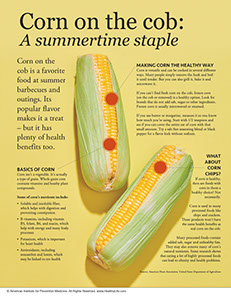
Corn on the cob: A summertime staple
Print on Demand
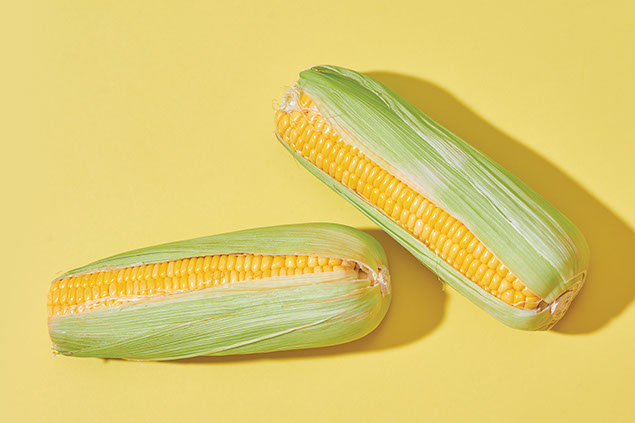
Corn on the cob is a favorite food at summer barbecues and outings. Its popular flavor makes it a treat – but it has plenty of health benefits too.
Basics of corn
Corn isn’t a vegetable. It’s actually a type of grain. Whole grain corn contains vitamins and heathy plant compounds.
Some of corn’s nutrients include:
• Soluble and insoluble fiber, which helps with digestion and preventing constipation
• B vitamins, including vitamin B5, folate, B6, and niacin, which help with energy and many body processes
• Potassium, which is important for heart health
• Antioxidants, including zeaxanthin and lutein, which may be linked to eye health
Making corn the healthy way
Corn is versatile and can be cooked in several different ways. Many people simply remove the husk and boil it until tender. But you can also grill it, bake it and microwave it.
If you can’t find fresh corn on the cob, frozen corn (on the cob or removed) is a healthy option. Look for brands that do not add salt, sugar or other ingredients. Frozen corn is usually microwaved or steamed.
If you use butter or margarine, measure it so you know how much you’re using. Start with 1/2 teaspoon and see if you can cover the entire ear of corn with that small amount. Try a salt-free seasoning blend or black pepper for a flavor kick without sodium.
What about corn chips?
If corn is healthy, then are foods with corn in them a healthy choice? Not necessarily.
Corn is used in many processed foods like chips and crackers. These products won’t have the same health benefits as real corn on the cob.
Many processed foods contain added salt, sugar and unhealthy fats. They may also remove many of corn’s natural nutrients. Some research shows that eating a lot of highly processed foods can lead to obesity and health problems.
Sources: American Heart Association, United States Department of Agriculture
This website is not meant to substitute for expert medical advice or treatment. Follow your doctor’s or health care provider’s advice if it differs from what is given in this guide.
The American Institute for Preventive Medicine (AIPM) is not responsible for the availability or content of external sites, nor does AIPM endorse them. Also, it is the responsibility of the user to examine the copyright and licensing restrictions of external pages and to secure all necessary permission.
The content on this website is proprietary. You may not modify, copy, reproduce, republish, upload, post, transmit, or distribute, in any manner, the material on the website without the written permission of AIPM.
2022 © American Institute for Preventive Medicine - All Rights Reserved. Disclaimer | www.HealthyLife.com