

SPECIFIC GROUPS



1 - 4
<
>
SYMPTOM CHECKER
CONDITIONS
Male
Female
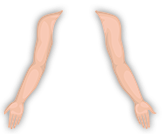
Arm, Hand & Shoulder Concerns
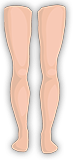
Legs & Feet Concerns
Dental & Mouth Concerns
Ear & Nose
Eye Conditions
Head Conditions
Arm, Hand & Shoulder Concerns
Legs & Feet Concerns
Front
Back
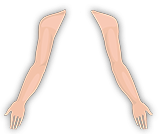
Arm, Hand & Shoulder Concerns
Dental & Mouth Concerns
Ear & Nose
Eye Conditions
Head Conditions
Arm, Hand & Shoulder Concerns
Dental & Mouth Concerns
Ear & Nose
Eye Conditions
Head Conditions
Front
Back
Living
Healthy
Online Clinic
Wise Healthcare
Online Counseling Center
Family Life
Financial Wellness
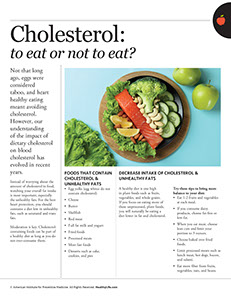
Cholesterol: to eat or not to eat?
Print on Demand
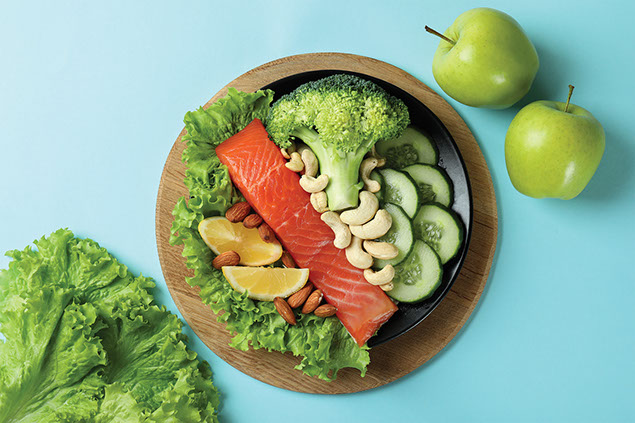
Not that long ago, eggs were considered taboo, and heart healthy eating meant avoiding cholesterol. However, our understanding of the impact of dietary cholesterol on blood cholesterol has evolved in recent years.
Instead of worrying about the amount of cholesterol in food, watching your overall fat intake is most important, especially the unhealthy fats. For the best heart protection, you should consume a diet low in unhealthy fats, such as saturated and trans fats.
Moderation is key. Cholesterol-containing foods can be part of a healthy diet as long as you do not over-consume them.
Foods that contain cholesterol & unhealthy fats
• Egg yolks (egg whites do not contain cholesterol)
• Cheese
• Butter
• Shellfish
• Red meat
• Full fat milk and yogurt
• Fried foods
• Processed meats
• Most fast foods
• Desserts such as cake, cookies, and pies
Decrease intake of cholesterol & unhealthy fats
A healthy diet is one high in plant foods such as fruits, vegetables, and whole grains. If you focus on eating more of these unprocessed, plant foods, you will naturally be eating a diet lower in fat and cholesterol.
Try these tips to bring more balance to your diet:
• Eat 1-2 fruits and vegetables at each meal.
• If you consume dairy products, choose fat-free or low-fat.
• When you eat meat, choose lean cuts and limit your portion to 3 ounces.
• Choose baked over fried foods.
• Limit processed meats such as lunch meat, hot dogs, bacon, and salami.
• Eat more fiber from fruits, vegetables, oats, and beans.
This website is not meant to substitute for expert medical advice or treatment. Follow your doctor’s or health care provider’s advice if it differs from what is given in this guide.
The American Institute for Preventive Medicine (AIPM) is not responsible for the availability or content of external sites, nor does AIPM endorse them. Also, it is the responsibility of the user to examine the copyright and licensing restrictions of external pages and to secure all necessary permission.
The content on this website is proprietary. You may not modify, copy, reproduce, republish, upload, post, transmit, or distribute, in any manner, the material on the website without the written permission of AIPM.
2022 © American Institute for Preventive Medicine - All Rights Reserved. Disclaimer | www.HealthyLife.com