
SPECIFIC GROUPS




1 - 4
<
>
SYMPTOM CHECKER
CONDITIONS
Male
Female
Arm, Hand & Shoulder Concerns
Legs & Feet Concerns
Dental & Mouth Concerns
Ear & Nose
Eye Conditions
Head Conditions
Arm, Hand & Shoulder Concerns
Legs & Feet Concerns
Front
Back
Arm, Hand & Shoulder Concerns
Dental & Mouth Concerns
Ear & Nose
Eye Conditions
Head Conditions
Arm, Hand & Shoulder Concerns
Dental & Mouth Concerns
Ear & Nose
Eye Conditions
Head Conditions
Front
Back
Living
Healthy
Online Clinic
Wise Healthcare
Online Counseling Center
Family Life
Financial Wellness
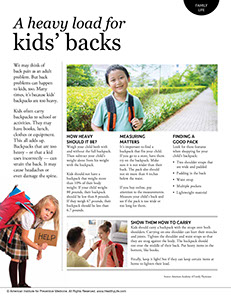
A heavy load for kids’ backs
Print on Demand
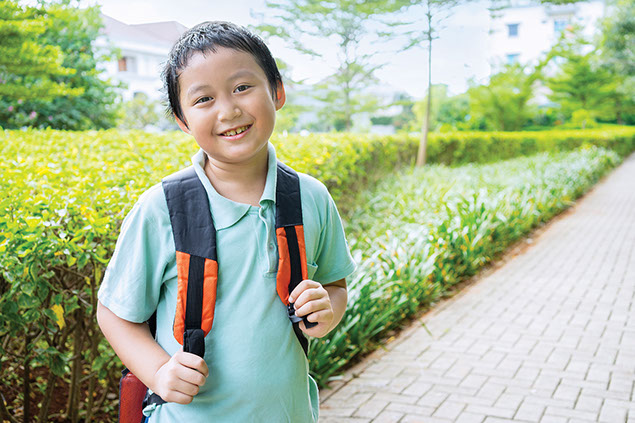
We may think of back pain as an adult problem. But back problems can happen to kids, too. Many times, it’s because kids’ backpacks are too heavy.
Kids often carry backpacks to school or activities. They may have books, lunch, clothes or equipment. This all adds up. Backpacks that are too heavy – or that a kid uses incorrectly — can strain the back. It may cause headaches or even damage the spine.
How heavy should it be?
Weigh your child both with and without the full backpack. Then subtract your child’s weight alone from his weight with the backpack.
Kids should not have a backpack that weighs more than 10% of their body weight. If your child weighs 80 pounds, their backpack should be less than 8 pounds. If they weigh 67 pounds, their backpack should be less than 6.7 pounds.
Measuring matters
It’s important to find a backpack that fits your child. If you go to a store, have them try on the backpack. Make sure it is not wider than their back. The pack also should not sit more than 4 inches below the waist.
If you buy online, pay attention to the measurements. Measure your child’s back and see if the pack is too wide or too long for them.
Finding a good pack
Look for these features when shopping for your child’s backpack:
• Two shoulder straps that are wide and padded
• Padding in the back
• Waist strap
• Multiple pockets
• Lightweight material
Show them how to carry
Kids should carry a backpack with the straps over both shoulders. Carrying on one shoulder can hurt their muscles and joints. Tighten the shoulder and waist straps so that they are snug against the body. The backpack should rest over the middle of their back. Put heavy items in the bottom, like books.
Finally, keep it light! See if they can keep certain items at home to lighten their load.
Source: American Academy of Family Physicians
This website is not meant to substitute for expert medical advice or treatment. Follow your doctor’s or health care provider’s advice if it differs from what is given in this guide.
The American Institute for Preventive Medicine (AIPM) is not responsible for the availability or content of external sites, nor does AIPM endorse them. Also, it is the responsibility of the user to examine the copyright and licensing restrictions of external pages and to secure all necessary permission.
The content on this website is proprietary. You may not modify, copy, reproduce, republish, upload, post, transmit, or distribute, in any manner, the material on the website without the written permission of AIPM.
2022 © American Institute for Preventive Medicine - All Rights Reserved. Disclaimer | www.HealthyLife.com