
SPECIFIC GROUPS




1 - 4
<
>
SYMPTOM CHECKER
CONDITIONS
Male
Female
Arm, Hand & Shoulder Concerns
Legs & Feet Concerns
Dental & Mouth Concerns
Ear & Nose
Eye Conditions
Head Conditions
Arm, Hand & Shoulder Concerns
Legs & Feet Concerns
Front
Back
Arm, Hand & Shoulder Concerns
Dental & Mouth Concerns
Ear & Nose
Eye Conditions
Head Conditions
Arm, Hand & Shoulder Concerns
Dental & Mouth Concerns
Ear & Nose
Eye Conditions
Head Conditions
Front
Back
Living
Healthy
Online Clinic
Wise Healthcare
Online Counseling Center
Family Life
Financial Wellness
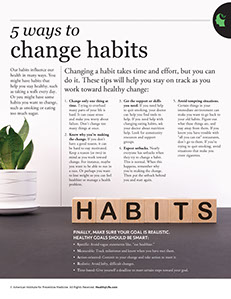
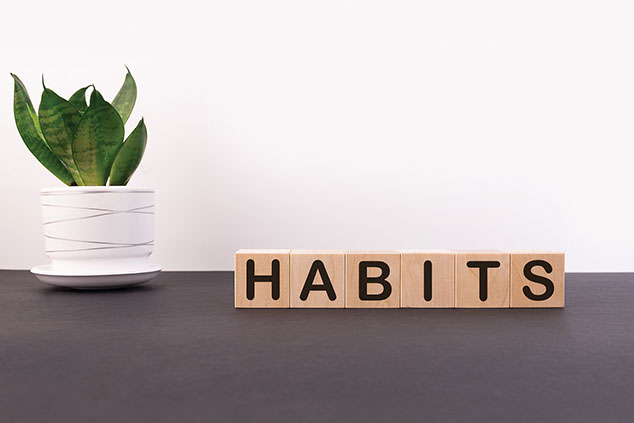
5 ways to change habits
Print on Demand
Our habits influence our health in many ways. You might have habits that help you stay healthy, such as taking a walk every day. Or you might have some habits you want to change, such as smoking or eating too much sugar.
Changing a habit takes time and effort, but you can do it. These tips will help you stay on track as you work toward healthy change:
1. Change only one thing at time. Trying to overhaul many parts of your life is hard. It can cause stress and make you worry about failure. Don’t change too many things at once.
2. Know why you’re making the change. If you don’t have a good reason, it can be hard to stay motivated. Keep a reason (or two) in mind as you work toward change. For instance, maybe you want to be able to run in a race. Or perhaps you want to lose weight so you can feel healthier or manage a health problem.
3. Get the support or skills you need. If you need help to quit smoking, your doctor can help you find tools to help. If you need help with changing eating habits, ask your doctor about nutrition help. Look for community resources and support groups.
4. Expect setbacks. Nearly everyone has setbacks when they try to change a habit. This is normal. When this happens, remember why you’re making the change. Then put the setback behind you and start again.
5. Avoid tempting situations. Certain things in your immediate environment can make you want to go back to your old habits. Figure out what these things are, and stay away from them. If you know you have trouble with “all you can eat” restaurants, don’t go to them. If you’re trying to quit smoking, avoid situations that make you crave cigarettes.
Finally, make sure your goal is realistic.
Healthy goals should be SMART:
• Specific: Avoid vague statements like, “eat healthier.”
• Measurable: Track milestones and know when you have met them.
• Action-oriented: Commit to your change and take action to meet it.
• Realistic: Avoid lofty, difficult changes.
• Time-based: Give yourself a deadline to meet certain steps toward your goal.
This website is not meant to substitute for expert medical advice or treatment. Follow your doctor’s or health care provider’s advice if it differs from what is given in this guide.
The American Institute for Preventive Medicine (AIPM) is not responsible for the availability or content of external sites, nor does AIPM endorse them. Also, it is the responsibility of the user to examine the copyright and licensing restrictions of external pages and to secure all necessary permission.
The content on this website is proprietary. You may not modify, copy, reproduce, republish, upload, post, transmit, or distribute, in any manner, the material on the website without the written permission of AIPM.
2022 © American Institute for Preventive Medicine - All Rights Reserved. Disclaimer | www.HealthyLife.com