
SPECIFIC GROUPS




1 - 4
<
>
SYMPTOM CHECKER
CONDITIONS
Male
Female
Arm, Hand & Shoulder Concerns
Legs & Feet Concerns
Dental & Mouth Concerns
Ear & Nose
Eye Conditions
Head Conditions
Arm, Hand & Shoulder Concerns
Legs & Feet Concerns
Front
Back
Arm, Hand & Shoulder Concerns
Dental & Mouth Concerns
Ear & Nose
Eye Conditions
Head Conditions
Arm, Hand & Shoulder Concerns
Dental & Mouth Concerns
Ear & Nose
Eye Conditions
Head Conditions
Front
Back
Living
Healthy
Online Clinic
Wise Healthcare
Online Counseling Center
Family Life
Financial Wellness
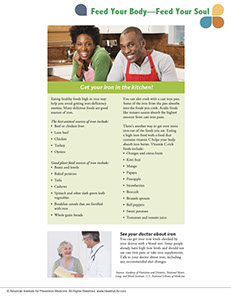
Get your iron in the kitchen!

Print on Demand
Eating healthy foods high in iron may help you avoid getting iron-deficiency anemia. Many delicious foods are good sources of iron.
The best animal sources of iron include:
• Beef or chicken liver
• Lean beef
• Chicken
• Turkey
• Oysters
Good plant food sources of iron include:
• Beans and lentils
• Baked potatoes
• Tofu
• Cashews
• Spinach and other dark green leafy vegetables
• Breakfast cereals that are fortified with iron
• Whole grain breads
You can also cook with a cast iron pan. Some of the iron from the pan absorbs into the foods you cook. Acidic foods like tomato sauces absorb the highest amount from cast iron pans.
There’s another way to get even more iron out of the foods you eat. Eating a high-iron food with a food that contains vitamin C helps your body absorb iron better. Vitamin C-rich foods include:
• Oranges and citrus fruits
• Kiwi fruit
• Mango
• Papaya
• Pineapple
• Strawberries
• Broccoli
• Brussels sprouts
• Bell peppers
• Sweet potatoes
• Tomatoes and tomato juice
See your doctor about iron
You can get your iron levels checked by your doctor with a blood test. Some people already have high iron levels and should not use cast iron pans or take iron supplements. Talk to your doctor about iron, including any recommended diet changes.
Sources: Academy of Nutrition and Dietetics, National Heart, Lung, and Blood Institute, U.S. National Library of Medicine
This website is not meant to substitute for expert medical advice or treatment. Follow your doctor’s or health care provider’s advice if it differs from what is given in this guide.
The American Institute for Preventive Medicine (AIPM) is not responsible for the availability or content of external sites, nor does AIPM endorse them. Also, it is the responsibility of the user to examine the copyright and licensing restrictions of external pages and to secure all necessary permission.
The content on this website is proprietary. You may not modify, copy, reproduce, republish, upload, post, transmit, or distribute, in any manner, the material on the website without the written permission of AIPM.
2022 © American Institute for Preventive Medicine - All Rights Reserved. Disclaimer | www.HealthyLife.com