
SPECIFIC GROUPS




1 - 4
<
>
SYMPTOM CHECKER
CONDITIONS
Male
Female
Arm, Hand & Shoulder Concerns
Legs & Feet Concerns
Dental & Mouth Concerns
Ear & Nose
Eye Conditions
Head Conditions
Arm, Hand & Shoulder Concerns
Legs & Feet Concerns
Front
Back
Arm, Hand & Shoulder Concerns
Dental & Mouth Concerns
Ear & Nose
Eye Conditions
Head Conditions
Arm, Hand & Shoulder Concerns
Dental & Mouth Concerns
Ear & Nose
Eye Conditions
Head Conditions
Front
Back
Living
Healthy
Online Clinic
Wise Healthcare
Online Counseling Center
Family Life
Financial Wellness
Bounce house dangers
Print on Demand
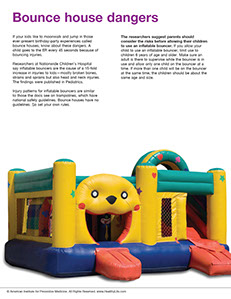
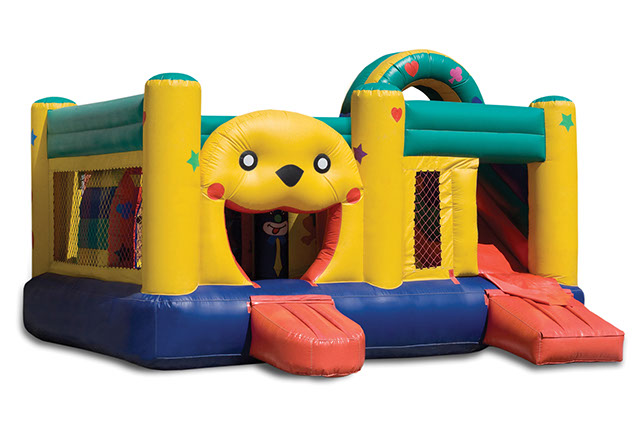
If your kids like to moonwalk and jump in those ever-present birthday-party experiences called bounce houses, know about these dangers. A child goes to the ER every 45 seconds because of bouncing injuries.
Researchers at Nationwide Children’s Hospital say inflatable bouncers are the cause of a 15-fold increase in injuries to kids—mostly broken bones, strains and sprains but also head and neck injuries. The findings were published in Pediatrics.
Injury patterns for inflatable bouncers are similar to those the docs see on trampolines, which have national safety guidelines. Bounce houses have no guidelines. So set your own rules.
The researchers suggest parents should consider the risks before allowing their children to use an inflatable bouncer. If you allow your child to use an inflatable bouncer, limit use to children 6 years of age and older. Make sure an adult is there to supervise while the bouncer is in use and allow only one child on the bouncer at a time. If more than one child will be on the bouncer at the same time, the children should be about the same age and size.
This website is not meant to substitute for expert medical advice or treatment. Follow your doctor’s or health care provider’s advice if it differs from what is given in this guide.
The American Institute for Preventive Medicine (AIPM) is not responsible for the availability or content of external sites, nor does AIPM endorse them. Also, it is the responsibility of the user to examine the copyright and licensing restrictions of external pages and to secure all necessary permission.
The content on this website is proprietary. You may not modify, copy, reproduce, republish, upload, post, transmit, or distribute, in any manner, the material on the website without the written permission of AIPM.
2022 © American Institute for Preventive Medicine - All Rights Reserved. Disclaimer | www.HealthyLife.com