SPECIFIC GROUPS




1 - 4
<
>
SYMPTOM CHECKER
CONDITIONS
Male
Female
Arm, Hand & Shoulder Concerns
Legs & Feet Concerns
Dental & Mouth Concerns
Ear & Nose
Eye Conditions
Head Conditions
Arm, Hand & Shoulder Concerns
Legs & Feet Concerns
Front
Back
Arm, Hand & Shoulder Concerns
Dental & Mouth Concerns
Ear & Nose
Eye Conditions
Head Conditions
Arm, Hand & Shoulder Concerns
Dental & Mouth Concerns
Ear & Nose
Eye Conditions
Head Conditions
Front
Back
Living
Healthy
Online Clinic
Wise Healthcare
Online Counseling Center
Family Life
Financial Wellness
Part 5: Be Physically Active
Resistance Training
Print on Demand
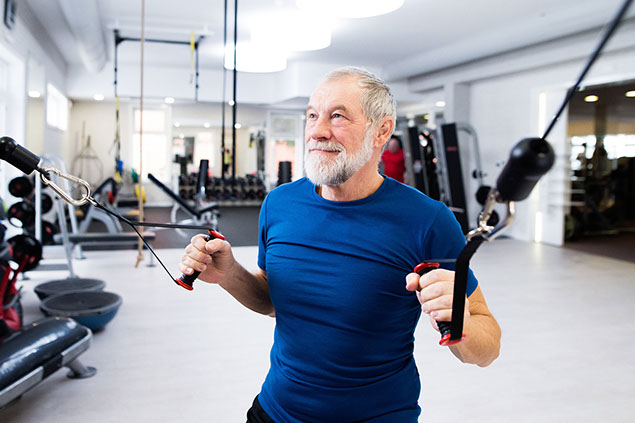
Make resistance training part of your exercise routine. Resistance training:
• Builds endurance. Your muscles can work longer before getting tired.
• Builds muscle. Muscle increases your resting metabolism. This means that even when your body is at rest, you are burning more fuel.
• Improves bone density. This helps prevent osteoporosis and fractures.
• Makes your body look more toned.
• Reduces the chance of injury while exercising.
Tips for Resistance Training:
• Use free weights, a stretch band, or your body weight. Use the Dyna® Band and Exercise Guide if you received these with HealthyLife® Weigh.
• Follow guidelines on resistance machines for proper form. Ask a personal trainer to make sure you are doing exercises correctly.
• Work out with a friend. Have someone spot you.
• Warm up with 15 repetitions, using ½ to ¾ of your usual weight.
• Rest your muscles for a day in between workouts. If you want to work out every day, do the upper body one day; the lower body the next.
• Move slowly. Don’t jerk the weights up or drop them too fast.
• Breathe out when you are at the hardest part of the exercise. Breathe in when you return to the starting position. Don’t hold your breath.
• Work opposing muscles. For example, after you work the front of the arm (biceps), work the back of the arm (triceps).
Examples of Resistance Training:
Knee Push-Up: Rest on your knees and on the palms of your hands, about shoulder width apart. Push up. Keep your body straight from knees to shoulders. Push up and down slowly to the count of 4.
Calf Raises: Stand with your feet about hip distance apart. Rise onto your toes. Hold for 1 count and lower. Try it on the edge of a step and let your heel drop below your toes for a wider range of motion.
HealthyLife® Weigh
QUICK LINKS: PART 5
RELATED ARTICLES
This website is not meant to substitute for expert medical advice or treatment. Follow your doctor’s or health care provider’s advice if it differs from what is given in this guide.
The American Institute for Preventive Medicine (AIPM) is not responsible for the availability or content of external sites, nor does AIPM endorse them. Also, it is the responsibility of the user to examine the copyright and licensing restrictions of external pages and to secure all necessary permission.
The content on this website is proprietary. You may not modify, copy, reproduce, republish, upload, post, transmit, or distribute, in any manner, the material on the website without the written permission of AIPM.
2022 © American Institute for Preventive Medicine - All Rights Reserved. Disclaimer | www.HealthyLife.com