
SPECIFIC GROUPS



1 - 4
<
>
SYMPTOM CHECKER
CONDITIONS
Male
Female
Arm, Hand & Shoulder Concerns
Legs & Feet Concerns
Dental & Mouth Concerns
Ear & Nose
Eye Conditions
Head Conditions
Arm, Hand & Shoulder Concerns
Legs & Feet Concerns
Front
Back
Arm, Hand & Shoulder Concerns
Dental & Mouth Concerns
Ear & Nose
Eye Conditions
Head Conditions
Arm, Hand & Shoulder Concerns
Dental & Mouth Concerns
Ear & Nose
Eye Conditions
Head Conditions
Front
Back
Living
Healthy
Online Clinic
Wise Healthcare
Online Counseling Center
Family Life
Financial Wellness
Part 3: Make a Plan
Meal Planning Basics
Print on Demand
This online guide uses the terms breakfast, lunch, dinner, and snacks.
• Breakfast: The first time you eat upon waking
• Lunch: 3-4 hours later
• Dinner: 4-5 hours later
• Snacks: Small meals between breakfast, lunch, and dinner. These are optional, but snacks may help you manage hunger.
Your work schedule, culture, travel, dietary restrictions, or preferences may mean you have a different meal schedule. Label each meal or snack in a way that makes sense to you.
Goals for all meals and snacks:
• Get enough energy and nutrients.
• Choose foods from the main food groups.
• Meet, but try not to go over, your daily goals for all food groups.
• Avoid spikes or drops in blood sugar that can trigger overeating, sugar cravings, mood swings, and tiredness.
• Include tasty foods.
• Build time management into the meal plan.
Do I have to eat breakfast?
Breakfast is an important meal that you shouldn’t skip. Eating breakfast:
• Gives your body energy after a long break in eating.
• Kick-starts your metabolism and helps you burn energy during the day.
• May help with memory, concentration, and focus.
• May lower your risk for heart disease, type 2 diabetes, and obesity.
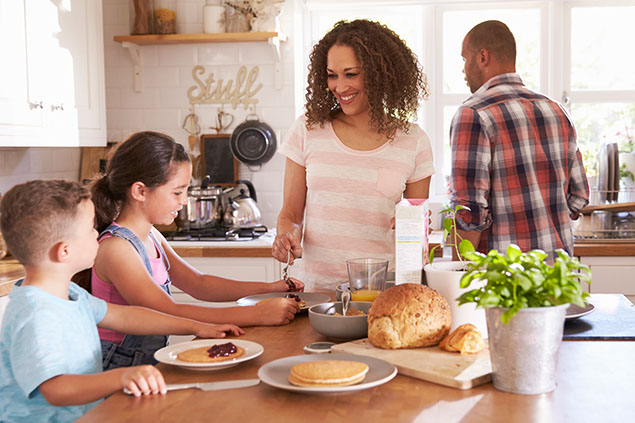
You don’t have to eat typical breakfast foods to get the benefits of eating breakfast. Choose foods high in protein and nutrient-dense carbohydrates. Try whole grain pancakes with yogurt and fruit. Or, re-heat leftovers from the night before.
HealthyLife® Weigh
QUICK LINKS: PART 3
RELATED ARTICLES
This website is not meant to substitute for expert medical advice or treatment. Follow your doctor’s or health care provider’s advice if it differs from what is given in this guide.
The American Institute for Preventive Medicine (AIPM) is not responsible for the availability or content of external sites, nor does AIPM endorse them. Also, it is the responsibility of the user to examine the copyright and licensing restrictions of external pages and to secure all necessary permission.
The content on this website is proprietary. You may not modify, copy, reproduce, republish, upload, post, transmit, or distribute, in any manner, the material on the website without the written permission of AIPM.
2022 © American Institute for Preventive Medicine - All Rights Reserved. Disclaimer | www.HealthyLife.com