

SPECIFIC GROUPS




1 - 4
<
>
SYMPTOM CHECKER
CONDITIONS
Male
Female
Arm, Hand & Shoulder Concerns
Legs & Feet Concerns
Dental & Mouth Concerns
Ear & Nose
Eye Conditions
Head Conditions
Arm, Hand & Shoulder Concerns
Legs & Feet Concerns
Front
Back
Arm, Hand & Shoulder Concerns
Dental & Mouth Concerns
Ear & Nose
Eye Conditions
Head Conditions
Arm, Hand & Shoulder Concerns
Dental & Mouth Concerns
Ear & Nose
Eye Conditions
Head Conditions
Front
Back
Living
Healthy
Online Clinic
Wise Healthcare
Online Counseling Center
Family Life
Financial Wellness
Part 3: Make a Plan
Limit Artificial Sweeteners

Print on Demand
Artificial sweeteners give a sweet taste without adding the calories you get with sugar. They don’t contribute to tooth decay and don’t raise blood sugar levels. However, consuming these sugar substitutes can have significant drawbacks. They may:
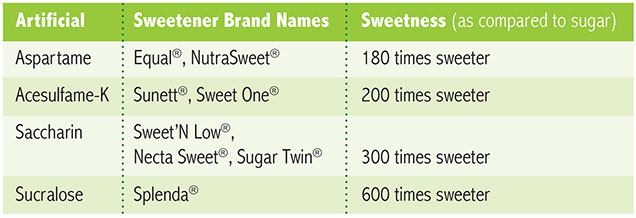
1. Raise your sweetness threshold. This can make it harder to break a sugar “addiction.” Artificial sweeteners are hundreds of times sweeter than regular sugar. This may cause you to crave sweeter foods.
HealthyLife® Weigh
QUICK LINKS: PART 3
2. Cause you to eat more. Eating and drinking sweet things signals the brain to want more. Even if the artificial sweetener doesn’t have any calories, it can lead to overeating and consuming extra foods that do.
3. Cause discomfort. This can be headaches, exhaustion, and digestive discomfort, including gas, bloating, and constipation.
4. Harm your gut bacteria. Artificial sweeteners may promote the growth of gut bacteria that store energy as fat. Gut bacteria that is not working properly also contributes to high blood sugar.
Stevia (Truvia®, Pure Via®) is a non-caloric sweetener made from an herb. It has not been studied as much as artificial sweeteners, but it is still super sweet (300 times sweeter than sugar) and may cause digestive discomfort for some people.
Sugar Alcohols (e.g., xylitol, sorbitol) are not sweeter than sugar and contain fewer calories than sugar. However, they may also cause digestive discomfort and headaches for some people.
RELATED ARTICLES
This website is not meant to substitute for expert medical advice or treatment. Follow your doctor’s or health care provider’s advice if it differs from what is given in this guide.
The American Institute for Preventive Medicine (AIPM) is not responsible for the availability or content of external sites, nor does AIPM endorse them. Also, it is the responsibility of the user to examine the copyright and licensing restrictions of external pages and to secure all necessary permission.
The content on this website is proprietary. You may not modify, copy, reproduce, republish, upload, post, transmit, or distribute, in any manner, the material on the website without the written permission of AIPM.
2022 © American Institute for Preventive Medicine - All Rights Reserved. Disclaimer | www.HealthyLife.com