SPECIFIC GROUPS


1 - 4
<
>
SYMPTOM CHECKER
CONDITIONS
Male
Female
Arm, Hand & Shoulder Concerns
Legs & Feet Concerns
Dental & Mouth Concerns
Ear & Nose
Eye Conditions
Head Conditions
Arm, Hand & Shoulder Concerns
Legs & Feet Concerns
Front
Back
Arm, Hand & Shoulder Concerns
Dental & Mouth Concerns
Ear & Nose
Eye Conditions
Head Conditions
Arm, Hand & Shoulder Concerns
Dental & Mouth Concerns
Ear & Nose
Eye Conditions
Head Conditions
Front
Back
Living
Healthy
Online Clinic
Wise Healthcare
Online Counseling Center
Family Life
Financial Wellness
Part 5: Be Physically Active
Exercise and Eating
Print on Demand
Exercise is not a solution for overeating or for eating unhealthy foods. Avoid treating exercise as a way to “make up” for eating more than your body needs. This can lead to feelings of guilt. It can also make exercise feel like a punishment.
We tend to overestimate the calories burned through exercise and under-estimate the calories in food. The number of calories burned during exercise also varies from person to person. Factors like age, gender, and physical fitness can increase or decrease the caloric burn. The number in a chart or on a cardio machine monitor may not be accurate for you.
Pre-Workout Eating
You don’t have to eat before working out early in the morning, but it may give you more energy and help your body recover faster.
Eat foods low in fat and fiber that can be digested easily. Include small amounts of protein in your pre-workout meals and snacks. This will help reduce muscle soreness. Experiment to find out what works best for you and allows you to feel your best.
Pre-workout snack ideas (30-60 minutes before exercise):
• Piece of fruit
• Low-fat or non-fat yogurt
• Trail mix
• Whole-wheat toast with banana slices
• Smoothie with plain yogurt, frozen berries, and protein powder
• Oatmeal with fresh fruit
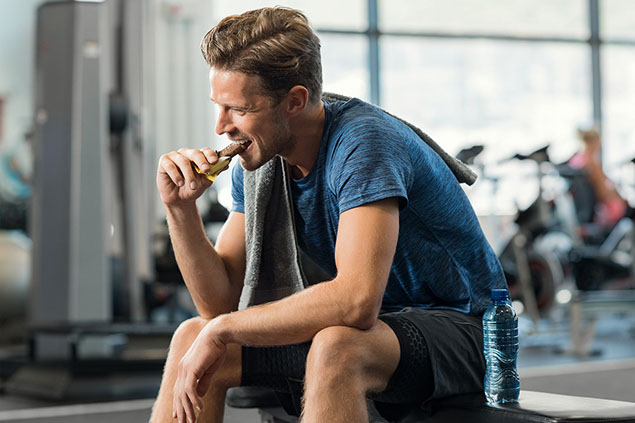
Post-Workout Eating
Exercise can increase your appetite. Your body wants to replace the calories you burned during exercise. Avoid overeating after exercise.
Eat foods rich in protein, fiber, and healthy fats. Drink water to replenish fluids.
Post-workout snack ideas (within 2 hours of exercise):
• Smoothie with plain yogurt, frozen berries, protein powder and avocado
• Banana with peanut butter
• Whole-wheat pita with turkey and veggies
• Protein bar (choose a bar with fewer than 5g of sugar)
• String cheese, apple, and whole grain crackers
• Veggie omelet with avocado
If you are close to your normal meal time, just have that. Or, if you are not close to your normal meal time, have a small snack.
HealthyLife® Weigh
QUICK LINKS: PART 5
RELATED ARTICLES
This website is not meant to substitute for expert medical advice or treatment. Follow your doctor’s or health care provider’s advice if it differs from what is given in this guide.
The American Institute for Preventive Medicine (AIPM) is not responsible for the availability or content of external sites, nor does AIPM endorse them. Also, it is the responsibility of the user to examine the copyright and licensing restrictions of external pages and to secure all necessary permission.
The content on this website is proprietary. You may not modify, copy, reproduce, republish, upload, post, transmit, or distribute, in any manner, the material on the website without the written permission of AIPM.
2022 © American Institute for Preventive Medicine - All Rights Reserved. Disclaimer | www.HealthyLife.com