


SPECIFIC GROUPS


1 - 4
<
>
CONDITIONS
SYMPTOM CHECKER
Male
Female
Arm, Hand & Shoulder Concerns
Broken Bones
Legs & Feet Concerns
Dental & Mouth Concerns
Ear & Nose
Eye Conditions
Head Conditions
Arm, Hand & Shoulder Concerns
Broken Bones
Legs & Feet Concerns
Front
Back
Arm, Hand & Shoulder Concerns
Broken Bones
Dental & Mouth Concerns
Ear & Nose
Eye Conditions
Head Conditions
Arm, Hand & Shoulder Concerns
Broken Bones
Dental & Mouth Concerns
Ear & Nose
Eye Conditions
Head Conditions
Front
Back
Living
Healthy
Online Clinic
Wise Healthcare
Mental & Social Health
Family Life
Financial Wellness
Good Grief

Print on Demand
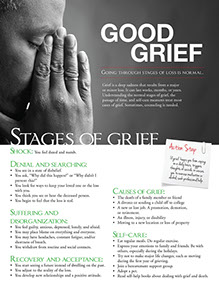
Going through stages of loss is normal.
Grief is a deep sadness that results from a major or minor loss. It can last weeks, months, or years. Understanding the normal stages of grief, the passage of time, and self-care measures treat most cases of grief. Sometimes, counseling is needed.
RELATED ARTICLES
Shock: You feel dazed and numb.
Denial and searching:
You are in a state of disbelief. You ask, “Why did this happen?” or “Why didn’t I prevent this?” You look for ways to keep your loved one or the loss with you. You think you see or hear the deceased person. You begin to feel that the loss is real.
Suffering and disorganization:
You feel guilty, anxious, depressed, lonely, and afraid. You may place blame on everything and everyone. You may have headaches, constant fatigue, and/or shortness of breath. You withdraw from routine and social contacts.
Recovery and acceptance:
You start seeing a future instead of dwelling on the past. You adjust to the reality of the loss. You develop new relationships and a positive attitude.
Self-care:
• Eat regular meals. Do regular exercise.
• Express your emotions to family and friends. Be with others, especially during the holidays.
• Try not to make major life changes, such as moving during the first year of grieving.
• Join a bereavement support group. Read self-help books about dealing with grief and death.
• Adopt a pet.
Causes of grief:
• The death of a family member or friend
• A divorce or sending a child off to college
• A new or lost job. A promotion, demotion, or retirement.
• An illness, injury, or disability
• Moving to a new location or loss of property
Action Step
If grief keeps you from coping on a daily basis, triggers thoughts of suicide, or causes you to overuse medication or alcohol, seek professional help.
This website is not meant to substitute for expert medical advice or treatment. Follow your doctor’s or health care provider’s advice if it differs from what is given in this guide.
The American Institute for Preventive Medicine (AIPM) is not responsible for the availability or content of external sites, nor does AIPM endorse them. Also, it is the responsibility of the user to examine the copyright and licensing restrictions of external pages and to secure all necessary permission.
The content on this website is proprietary. You may not modify, copy, reproduce, republish, upload, post, transmit, or distribute, in any manner, the material on the website without the written permission of AIPM.
Pediatric Care
2022 © American Institute for Preventive Medicine - All Rights Reserved. Disclaimer | www.HealthyLife.com


